

Top 10 Features Every College Management System Should Have in 2026
Discover the essential features colleges should look for in a modern college management system in 2026.
Table of Contents
- Introduction
- Complete Student Management
- Academic Management
- Examination and Assessment Management
- Attendance Management
- Finance and Fee Management
- Faculty and HR Management
- Learning and Knowledge Management
- Communication and Self-Service
- Reports and Analytics
- Mobile Access, Security, and Scalability
- Choosing the Right College Management Software
- How HiGrade Brings These Features Together
- Final Thoughts
Introduction
Managing a college today involves much more than maintaining student records. Admissions, academics, attendance, examinations, fees, faculty, communication, reports, and administrative activities all need to work together. When these processes are handled through separate systems or spreadsheets, it can become difficult for staff to access accurate information and manage everyday operations efficiently.
This is why choosing the right college management system has become an important decision for educational institutions in 2026.
A good system should not simply digitize existing paperwork. It should help colleges connect their processes, reduce repetitive work, and give students, faculty, and administrators easier access to the information they need.
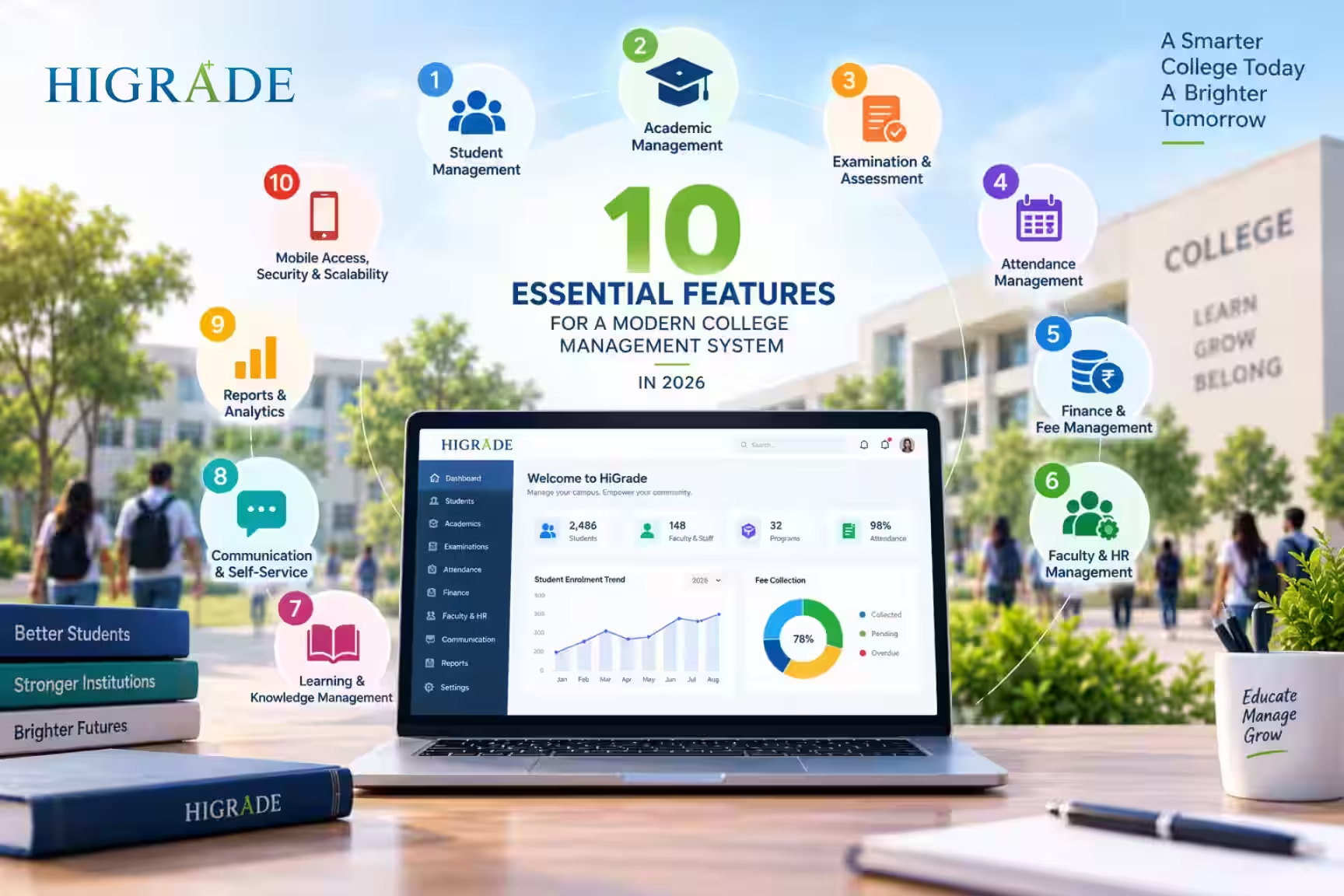
Here are ten important features colleges should look for.
1. Complete Student Management
Students are at the center of college operations, so student management should be one of the strongest parts of any system.
A modern platform should allow institutions to manage student information from admission through graduation without maintaining separate records for every stage.
It should support activities such as:
- Student profiles
- Course enrollment
- Attendance
- Certificates
- Scholarships
- Student communication
- Alumni information
Having this information in one place makes everyday student management much easier for administrative teams.
2. Academic Management
Academic processes involve multiple activities, from creating programs and courses to managing registrations, timetables, and academic calendars.
A reliable academic management module should help faculty and administrators manage these activities without depending heavily on spreadsheets or manual records.
The system should make it easier to coordinate academic activities and give the right users access to relevant information.
3. Examination and Assessment Management
Examinations are one of the most data-intensive processes in a college.
From internal assessments and marks to examination schedules and results, the system should help institutions manage the entire process efficiently.
A strong examination management feature can support:
- Internal assessments
- Examination scheduling
- Marks management
- Result processing
- Performance analysis
- Examination reports
This can reduce manual work while improving accuracy and accessibility.
4. Attendance Management
Attendance is closely connected to student performance and academic eligibility.
Instead of maintaining physical registers or separate spreadsheets, colleges can use digital attendance management to record and monitor attendance more efficiently.
Faculty should be able to update attendance easily, while students and authorized administrators can access the information when required.
A good system can also make it easier to identify attendance shortages and generate reports without manually calculating the data.
5. Finance and Fee Management
Managing college finances requires accurate and timely information.
A modern finance management feature should support fee collection, payment tracking, scholarships, receipts, and financial reporting.
Similarly, account management should help finance teams maintain organized records and reduce unnecessary manual processes.
When finance is connected with student information, staff can access relevant fee details without switching between different applications.
6. Faculty and HR Management
College employees also need a dedicated digital management system.
A good HR management module can help institutions maintain staff profiles, attendance, leave, payroll, and other employee-related information.
For staff management, the system should provide administrators with a centralized view of faculty and staff information.
This can make HR operations more organized while reducing repetitive administrative work.
7. Learning and Knowledge Management
Modern colleges are increasingly using digital learning resources.
A college platform should therefore support learning activities alongside traditional academic administration. LMS integration, digital repositories, learning materials, and institutional documents can all be part of this ecosystem.
Effective knowledge management also helps institutions organize important information so that faculty and students can access resources more easily.
The goal is to create an environment where academic information is not scattered across different platforms.
8. Communication and Self-Service
Communication is an important part of the student experience.
Colleges regularly need to send announcements, circulars, examination updates, fee reminders, and other notifications.
A modern system should provide communication tools that allow institutions to reach students and staff through appropriate channels.
Self-service portals can also reduce the workload on administrative teams by allowing users to access information and complete certain activities themselves.
For example, students may be able to check attendance, view examination information, access fees, or receive important notifications without visiting an administrative office.
9. Reports and Analytics
A college generates large amounts of data every day. Simply storing that data is not enough.
Administrators need reports that help them understand what is happening across the institution.
A good college management software platform should provide customizable reports and useful analytics for areas such as:
- Student performance
- Attendance
- Admissions
- Examination results
- Fees
- Faculty
- Academic activities
These insights can help college leaders make decisions based on actual institutional data rather than relying entirely on manual analysis.
10. Mobile Access, Security, and Scalability
College users increasingly expect to access information from anywhere.
Mobile accessibility allows students, faculty, parents, and administrators to interact with the system without always depending on a desktop computer.
At the same time, security should never be overlooked. The platform should provide appropriate access controls and protect institutional information.
Scalability is equally important. A college may begin with a single campus and later expand to multiple campuses or departments. The chosen system should be capable of growing with the institution.
Choosing the Right College Management Software
The best college management system software is not necessarily the one with the longest feature list. What matters is how effectively those features work together.
Before choosing a solution, colleges should consider:
- Does it connect different departments?
- Is it easy for staff and students to use?
- Can it scale as the institution grows?
- Does the provider offer implementation and training?
- Is technical support available after implementation?
- Can the system be customized to institutional requirements?
- Does it provide secure access to institutional data?
These questions are particularly important when comparing different ERP software for colleges.
How HiGrade Brings These Features Together
HiGrade is designed as a comprehensive platform for colleges, bringing academic, student, examination, HR, finance, learning, communication, and campus operations together in one connected environment.
Instead of managing each department separately, institutions can use HiGrade to create a more organized digital ecosystem across their college.
Its approach focuses on making everyday college operations simpler for administrators, faculty, and students while providing institutions with the tools they need to manage their growing digital requirements.
For colleges looking for smart college ERP software, having these core capabilities in one platform can provide a strong foundation for long-term digital transformation.
Final Thoughts
In 2026, a college management system should do more than replace paperwork. It should connect people, processes, and information across the institution.
From student management and academics to examinations, finance, HR, learning, communication, and analytics, the right technology can reduce administrative complexity and create a better experience for everyone on campus.
The key is not simply choosing software with more features. It is choosing a system where those features work together to support the way your college actually operates.
HiGrade brings these essential capabilities together to help colleges build a more connected, efficient, and future-ready campus.